ZZ plant
Zamioculcas zamiifolia
Handles low-light corners and stores water in its thick underground stems, so a forgotten week is survivable. Glossy leaflets look intentional in a dark hallway.
 Wilder Plant Guide
Wilder Plant Guide · Hong Kong
Pick species that forgive a dim corner and a missed watering day. This guide walks a first-time or busy owner through a short list of beginner indoor plants that hold up in compact Hong Kong flats and offices.
Start with the room
Most beginner plants fail for two reasons: the spot gets less light than the buyer assumed, and the watering schedule belongs to the seller, not the plant. Measure the corner first, then choose the species.
Sit in the corner at the hour you actually use the room. If you cannot read a page comfortably without a lamp, treat it as a low-light spot and choose a plant that expects that.
A plant that spreads sideways will crowd a Hong Kong living room faster than one that grows upward. Note the width of the shelf, ledge, or floor corner it will live in.
If you travel or work long hours, pick a plant that tolerates a dry spell. A species that sulks after two missed waterings is a poor fit for a busy schedule.
Air-conditioned rooms dry out quickly and can chill a plant near the vent. A spot a metre from the airflow suits more species than the vented corner does.
The shortlist
Each of these tolerates variable light and a missed watering better than most. None of them needs a greenhouse, a grow light, or a strict timetable.
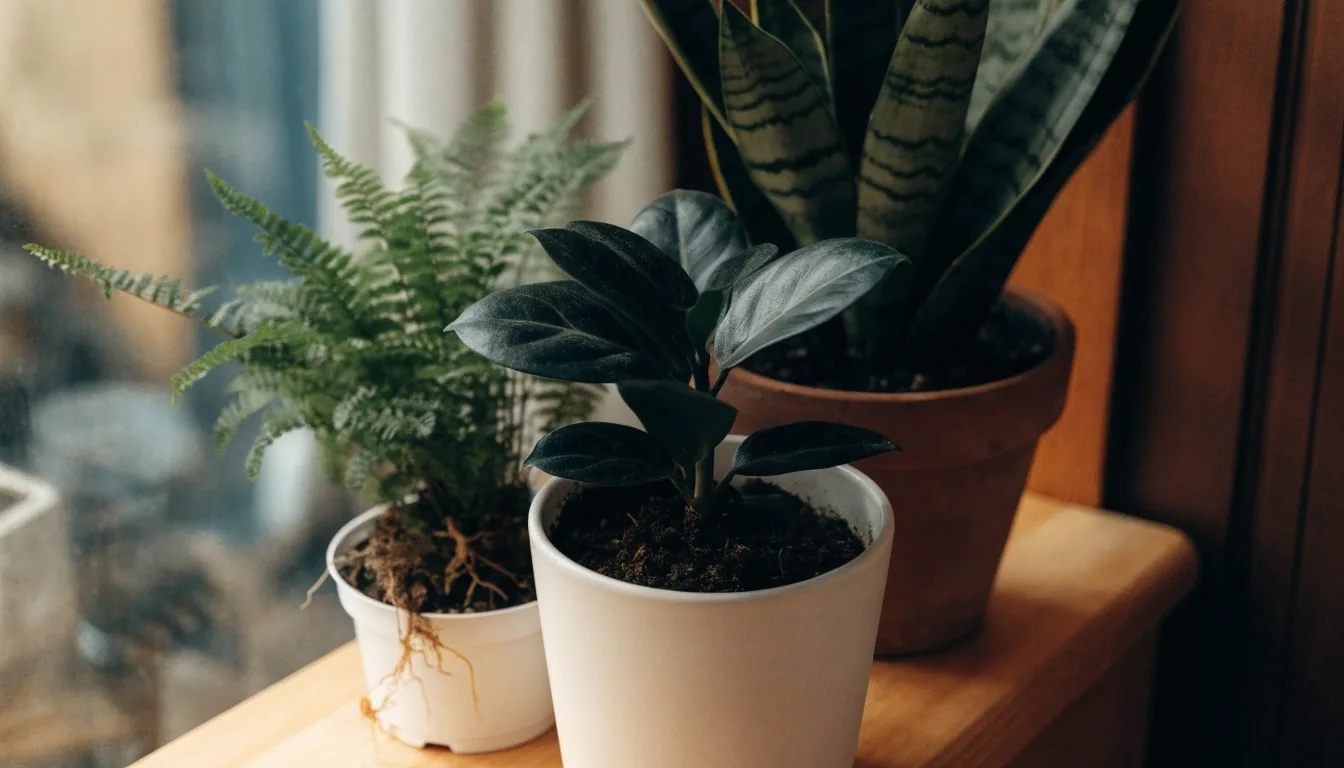
Zamioculcas zamiifolia
Handles low-light corners and stores water in its thick underground stems, so a forgotten week is survivable. Glossy leaflets look intentional in a dark hallway.
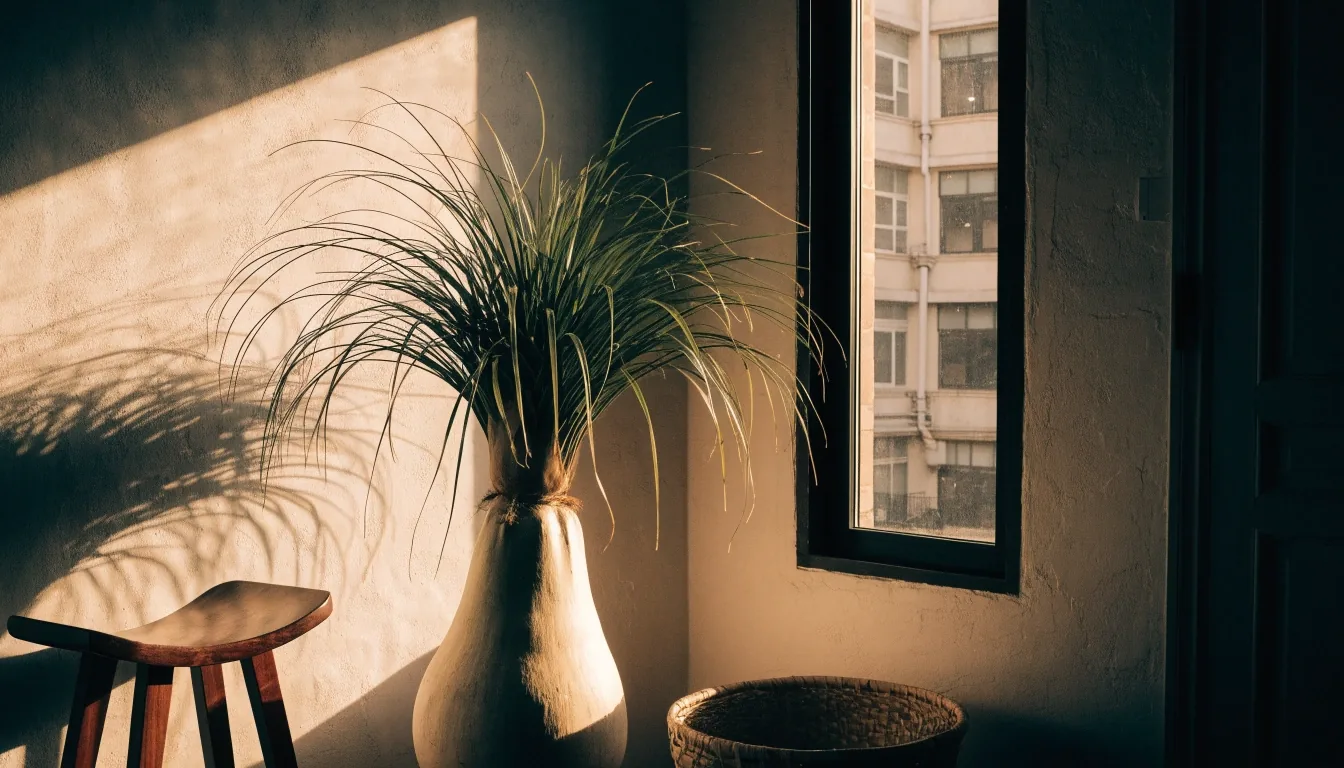
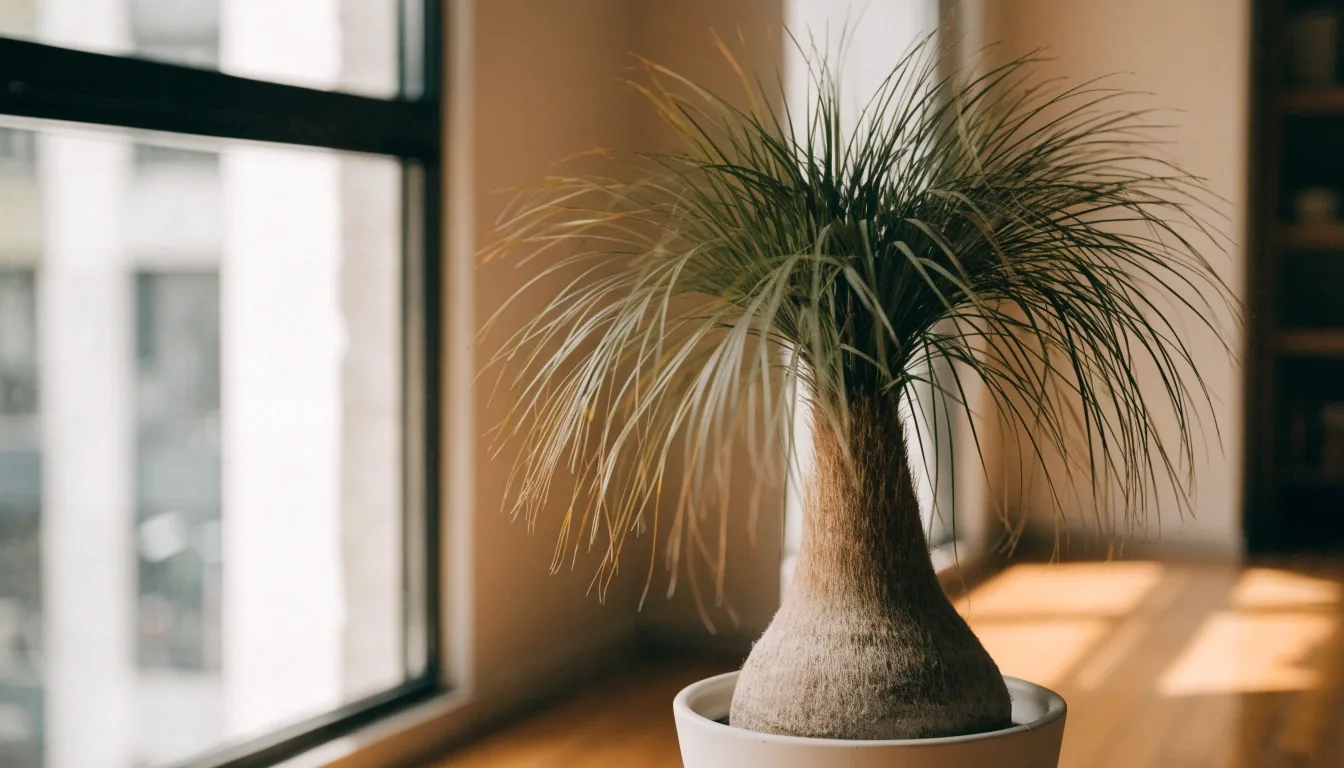
Beaucarnea recurvata
Grows upward rather than out, which suits a narrow flat. The swollen trunk holds moisture; water only when the top of the soil has gone dry.
Nephrolepis exaltata
Prefers a brighter, damper spot and rewards it with soft arching fronds. Give it a bathroom ledge or a shaded balcony window rather than a dark interior wall.
Dracaena trifasciata
Upright leaves fit a tight floor corner and tolerate both dim rooms and irregular watering. It is one of the most forgiving low-light tolerant plants for a first purchase.
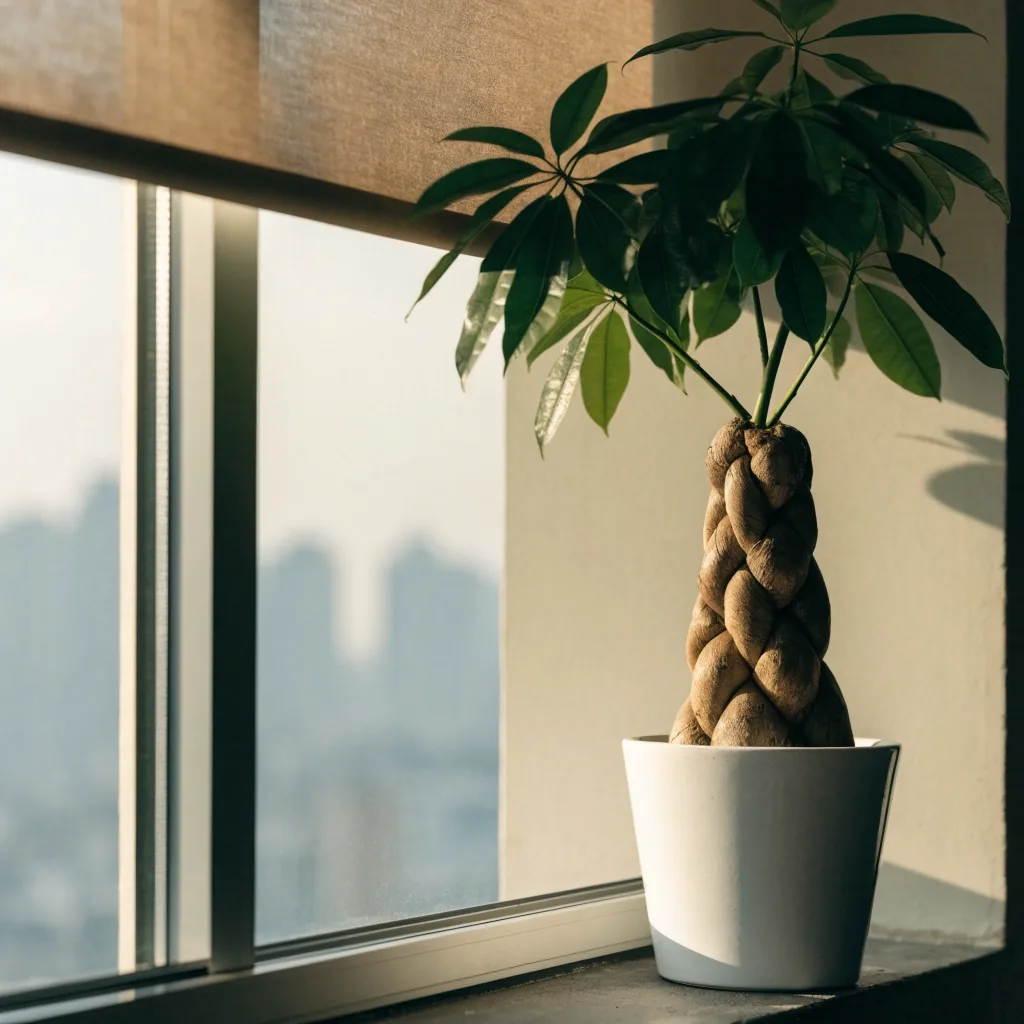
Pachira aquatica
A braided trunk and palmate leaves give height without much width. Keep it out of direct midday sun and let the soil dry between waterings.
Saintpaulia ionantha
Small enough for a desk and happy under ordinary room light. Water at the base rather than over the fuzzy leaves, and it will keep flowering in a modest space.
Side by side
Use this as a starting point. Your own window, humidity, and air-conditioning will shift the numbers, so treat each row as a range rather than a rule.
| Plant | Light it accepts | Watering rhythm | Space it needs |
|---|---|---|---|
| ZZ plant | Low to medium; keeps its shape away from windows | Let the soil dry fully, then water | Narrow upright clump, fits a floor corner |
| Ponytail palm | Bright indirect; tolerates a dull stretch | Sparingly; dry soil between waterings | Grows tall and thin, good for tight spots |
| Boston fern | Medium to bright indirect; dislikes deep shade | Keep lightly moist; check more often | Spreads sideways, wants a ledge or stand |
| Snake plant | Low to bright; the most flexible of the six | Infrequent; overwatering is the main risk | Vertical footprint, minimal width |
| Money tree | Bright indirect; shield from harsh midday sun | Moderate; let the surface dry first | Upright trunk, needs a stable floor spot |
| African violet | Medium indirect; comfortable on a desk | Even moisture at the base, not the leaves | Compact pot, small shelf footprint |
Two decisions
Almost every struggling beginner plant is sitting in the wrong light or being watered on a fixed calendar. Fix those two things and the rest of houseplant care gets much quieter.
Check the soil with a finger before you pour. If it is still damp a centimetre down, wait. A plant that dries out between waterings is far easier to keep than one that never does.
At the shop
A cheap plant that is already stressed will cost you more in the first month than a sturdier one at a slightly higher price.
Choose the plant that fits the room you already have. A dim corner with a forgiving species beats a bright corner with a demanding one.
Once the plant is home, the next questions are where to put it and how often to water. The linked guides below cover both, plus repotting when the roots eventually outgrow the pot.
Where to go next
Each chapter stands alone, so you can read the one you need now and come back for the others when the plant asks for it.
Where a plant sits in a compact flat changes how much light it receives and how often you notice it needs water. This chapter covers ledges, corners, and shared office desks.
Open chapterWindow direction, blockers, and the difference between what a plant needs and what a Hong Kong flat actually offers, with practical ways to read the light in your own room.
Open chapterHow to check the soil rather than follow a calendar, why humidity changes the answer, and what to do when you return from a trip and the pot feels lighter than you expect.
Open chapterWhen a plant outgrows its pot, how to tell, and how to move it without setting it back. Includes what to do with roots that have circled the base of the container.
Open chapterA short weekly check that covers most plants, plus how to group species with similar needs so a single round of care handles the whole shelf.
Open chapterAll six chapters in one place, plus the project description and the contact details if you would like to ask a question before you buy.
Back to the guideCommon questions
A few questions come up often from first-time owners in Hong Kong. If yours is not here, the contact page is the right place to ask.
A windowless room is hard on most species. The ZZ plant and snake plant cope better than most, but growth will be slow and you will need to water less often because the soil dries more slowly in dim conditions. If the room is used daily, a low-output lamp on for part of the day helps more than moving the plant around.
Yellowing lower leaves, soft stems, and soil that stays dark for days are the usual signs. Stop watering, let the pot drain fully, and do not water again until the top layer of soil is dry. In an air-conditioned flat, this can take noticeably longer than the label on the plant suggests.
Start with one or two. Learning how a single plant behaves in your specific room teaches you more than juggling six at once. Once you can keep one healthy through a full season, adding a second with similar needs is straightforward.
Yes, with two adjustments. Keep the plant away from the direct path of the vent, and expect the soil to dry faster in dry air. Most offices also lose light after hours, so choose a species from the low-light end of the shortlist for a desk that sits away from the windows.
Water thoroughly before you leave, move the plants away from direct sun so they use less water, and avoid leaving them in standing water. Species on this list tolerate a gap better than ferns or flowering plants, which is one reason they suit people who travel.
Next step
Choose from the shortlist, follow the placement and watering chapters as you settle it in, and give it a season before adding another. If you have a question about your own space, the contact page is open Monday to Friday, 9:00 AM – 6:00 PM.