
Start with the room
Measure the floor you walk on before you buy a pot
In a Hong Kong flat, floor area disappears first. Doorways, the strip beside the bed, the path from the sofa to the kitchen, and the space under a desk are all circulation, not storage. A plant that sits there will be moved twice a week and eventually knocked over. Walk the room once and mark the clear routes with tape or string. Whatever falls outside those routes is planting space, and it is usually more than people expect: windowsills, the top of a low cabinet, a shelf above a monitor, the wall beside a door.
Then check light. Stand where the plant will actually live, not where you are standing now, and watch the surface through one day. A windowsill that looks bright at noon can be dim by four. Rooms with one facing window are common here, and the light falls off quickly two or three steps inside. That measurement decides which placements are realistic and which will need a plant that tolerates low light.
- Keep a clear width of about one arm's length along every walking route, including the path to the bathroom at night.
- Watch each candidate spot at morning, noon, and late afternoon before you commit a plant to it.
- Stay away from the air-conditioner vent and the gap behind a fridge; both dry leaves out faster than a missed watering.
- Leave the plug sockets, the cable run to the router, and the space above a radiator free.
A plant does not need floor space. It needs a surface that is already there.
Five placements that work in a compact flat or desk
Each of these uses a surface the room already has. Pick two or three, not all five. A small flat reads better with a few well-placed plants than with one in every corner, and fewer plants are easier to keep watered on a busy week.
Windowsill and window ledge
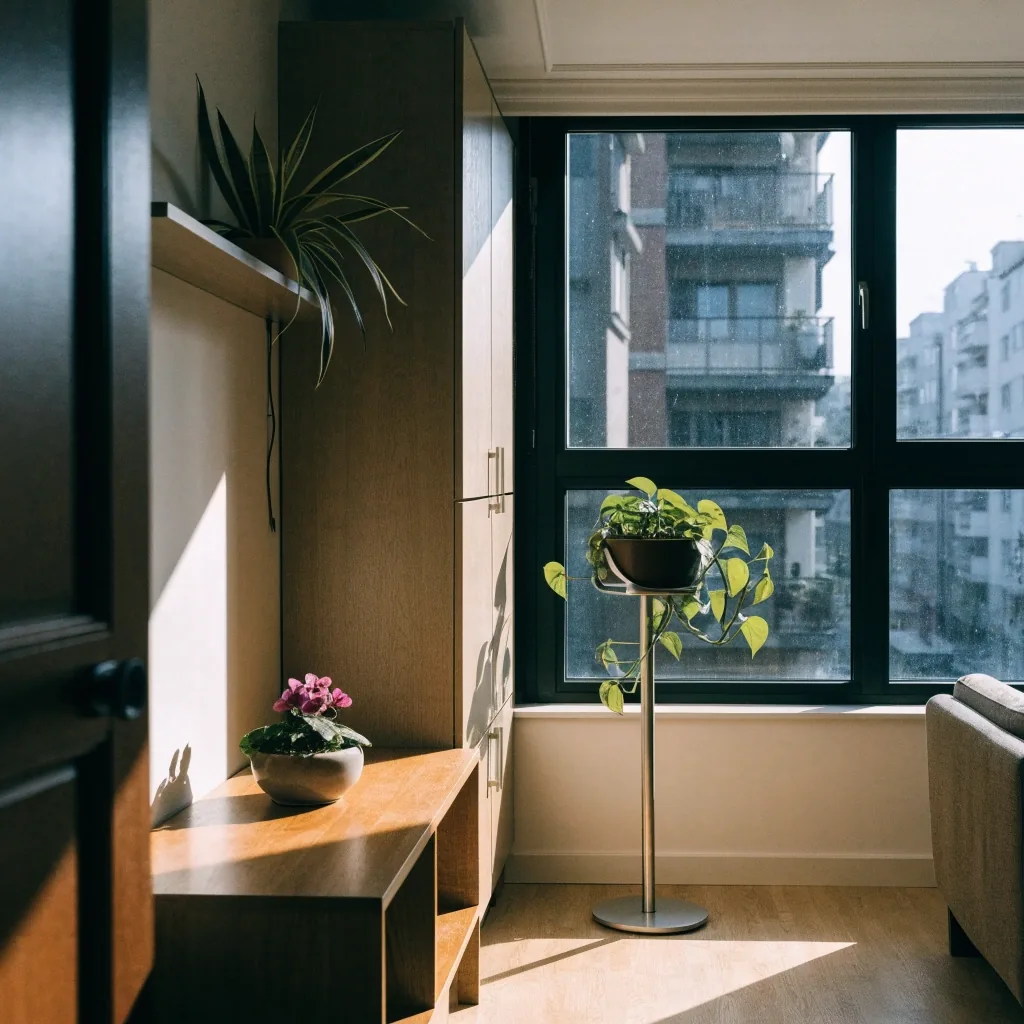
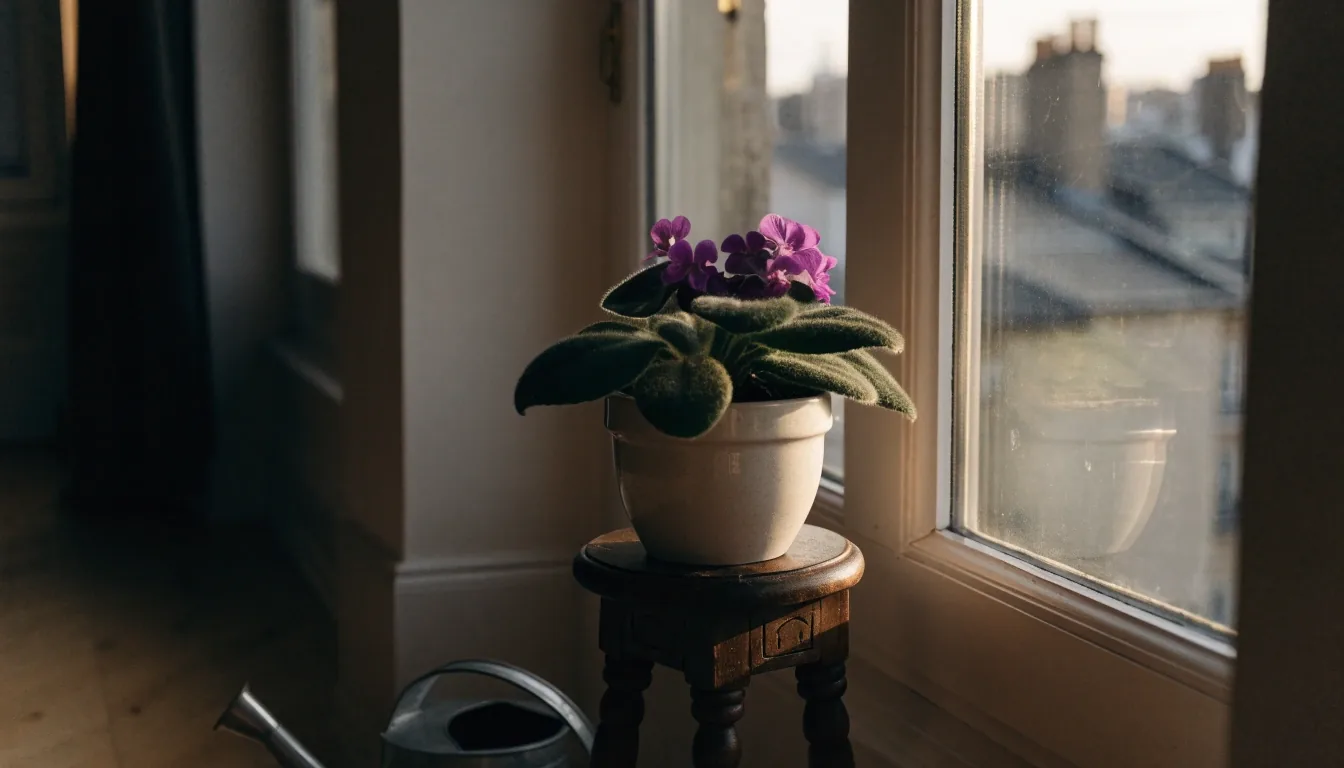
The brightest strip in most flats. A single African violet, a small peace lily, or a compact pothos in a six-to-ten centimetre pot fits a standard ledge without crowding the glass. Keep the pot short so it does not block the light coming in for the rest of the room, and stand it on a saucer or a shallow tray so drips do not stain the sill.
Shelf above eye level
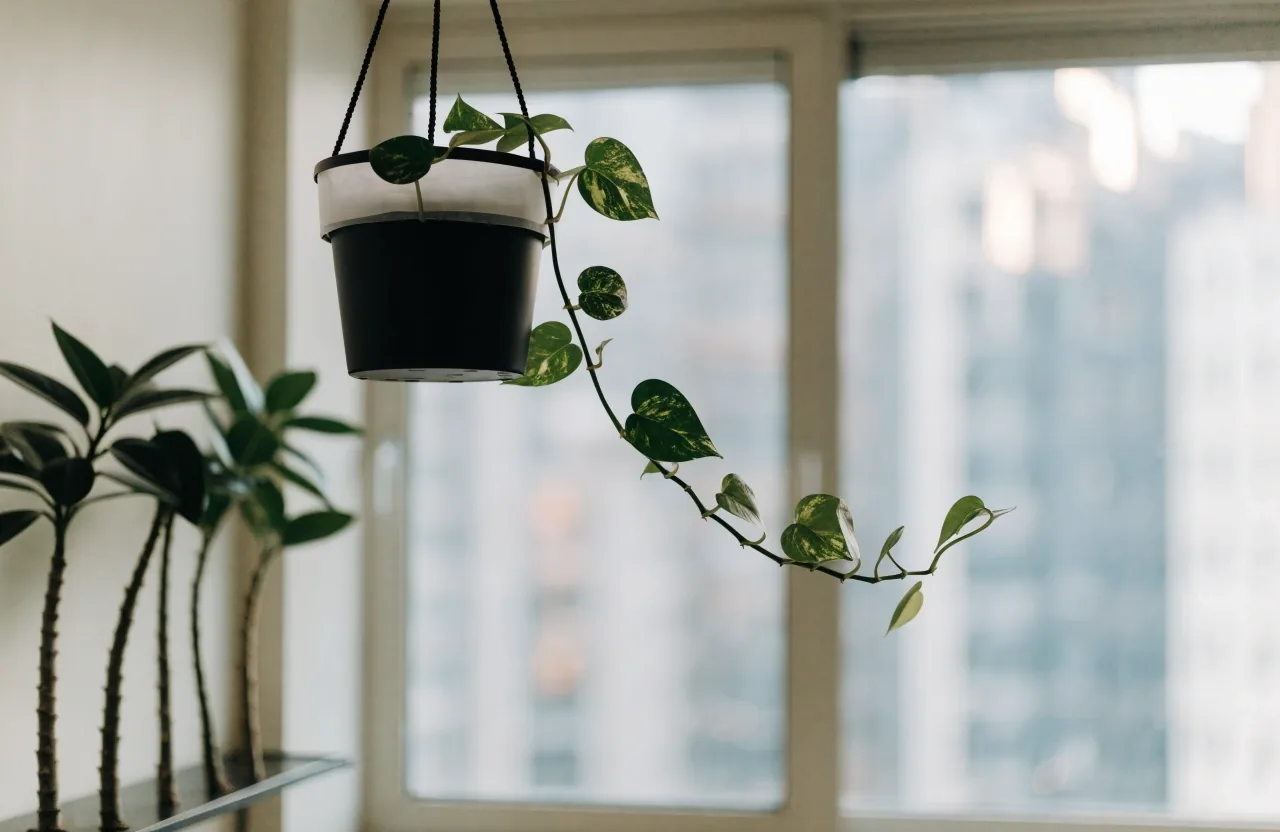
The top shelf of a bookcase, a wall shelf above a monitor, or the rail over a wardrobe. Trailing plants such as pothos, string of hearts, or a small fern can hang a little below the shelf edge without touching anyone walking past. Water these by lifting the pot down, watering over the sink, and letting it drain before it goes back. Do not leave a saucer up there to overflow onto the shelf below.
Hanging planter by the window
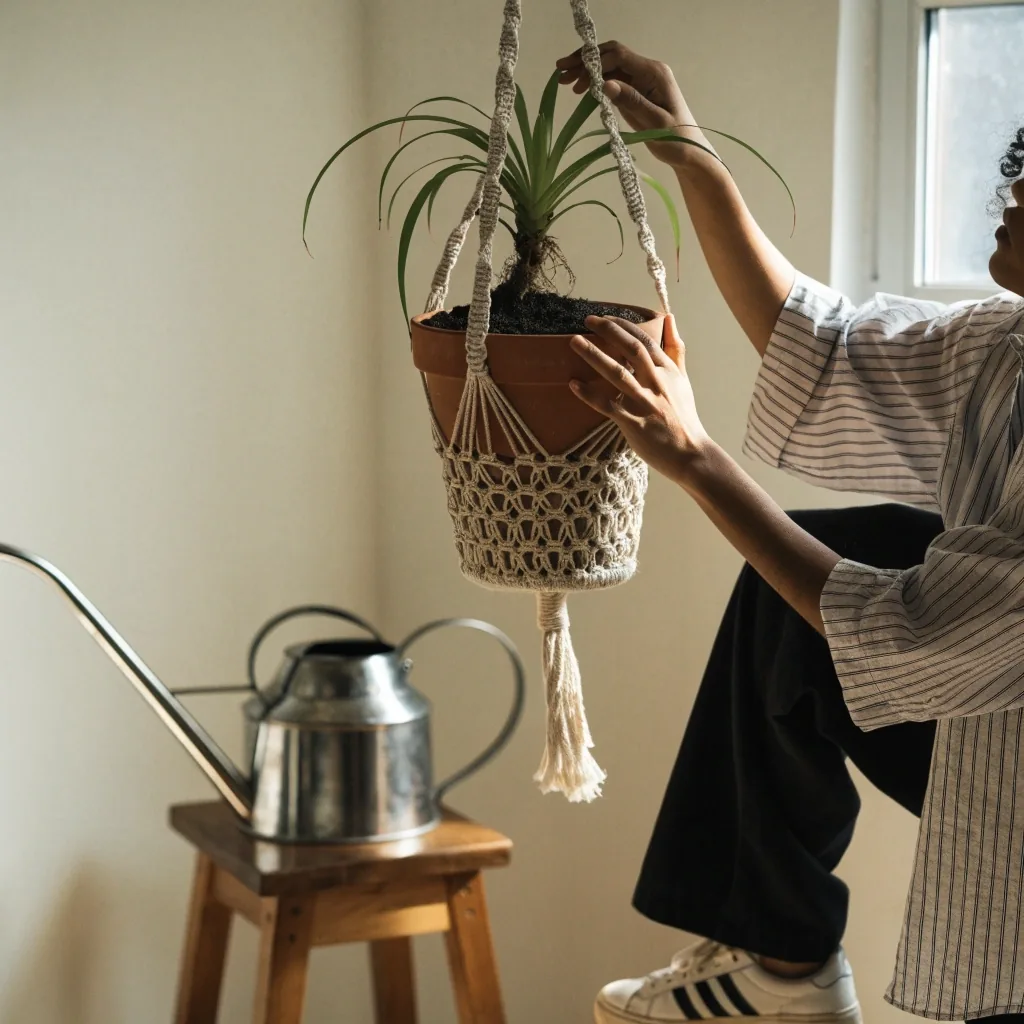
A hanging planter uses the empty upper corner beside a window where no furniture can stand. Mount it into a stud or use a proper ceiling anchor, and hang it high enough that a standing adult does not meet it with their head. Choose a lightweight pot and a plant that trails, and check the ceiling for pipes and wiring before drilling. In rented flats, a tension rod or a freestanding plant stand is often the simpler answer.
Desk corner
Desk plants work best at the back corner, away from the keyboard, the mouse hand, and the drink. A small snake plant, a ZZ plant, or a single succulent in a heavy pot will not tip when a cable is pulled. Keep the pot under about fifteen centimetres wide so the desk still has room for paper, and put a coaster underneath if the surface is wood.
Wall-mounted rail or grid
A narrow rail with two or three small pots turns a blank wall into planting space and takes no floor at all. This suits the strip beside a kitchen window or the wall next to a desk. Small pots dry out faster than large ones, so a rail of four pots needs more attention than one big plant on the floor. Check what the wall is made of before you drill, and keep the rail clear of door swings and light switches.
Keeping plants out of the light path
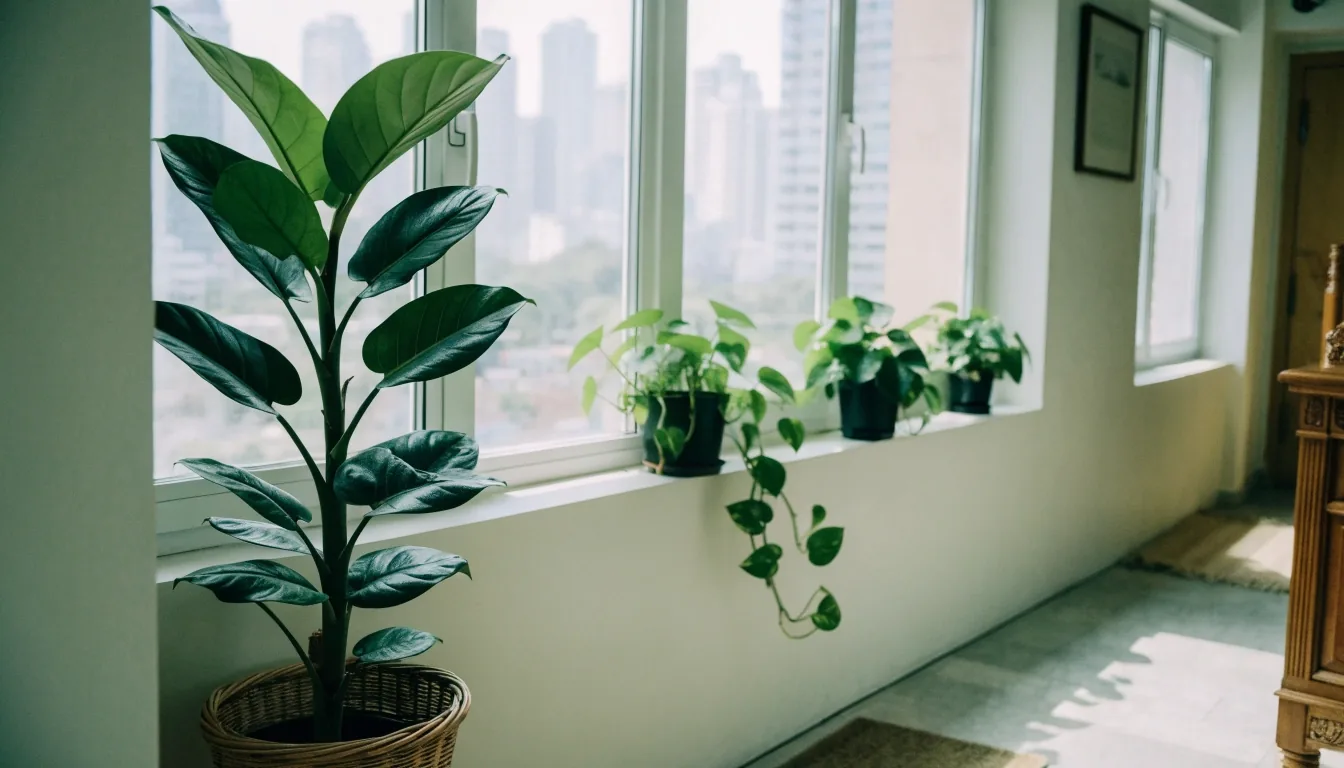
A plant in front of a window can block more light than its size suggests, and in a flat with one facing window that matters for the whole room. Keep tall plants to the sides of the glass rather than the middle, and use low pots on the sill. If a shelf sits between the window and the room, keep the plants at the ends and leave the centre clear.
Match the plant to the spot
The right plant for a dark corner is not the right plant for a bright ledge. These are the placements that suit low-light flats, single-window offices, and rooms that only see morning sun.
| Where it goes | What suits it | What to watch |
|---|---|---|
| Bright windowsill | African violet, small peace lily, pothos cutting | Leaf scorch behind glass in strong afternoon sun |
| Shelf above eye level | Pothos, string of hearts, small fern | Water damage on the shelf below |
| Hanging planter near window | Trailing pothos, small philodendron | Head height and ceiling fixings |
| Desk corner | Snake plant, ZZ plant, one succulent | Water rings on a wooden desk |
| Wall rail or grid | Small pots of pothos, spider plant offsets | Fast drying in small pots |
| Dim interior corner | Snake plant, ZZ plant, cast iron plant | Slow growth and wet soil that stays wet |
If a spot is dim all day, choose a plant from the bottom row rather than moving a bright-light plant there and hoping. For a fuller look at light levels through the day, see Light for Indoor Plants.
Renting? Fixings that come out cleanly
Most flats here are rented, and a landlord will notice a hole in the ceiling. Before you drill anything, check the tenancy agreement for what is allowed. Adhesive hooks hold small, light pots on a tiled wall but fail on paint and on textured surfaces, and they release suddenly rather than slowly. A freestanding plant stand, a slim ladder shelf against a wall, or a tension rod in a window recess needs no fixing at all and moves with you.
For anything heavier, use a proper wall anchor rated for the weight and check for pipes and wiring first. A pot of damp soil plus a ceramic container is heavier than it looks, and a hanging planter adds the weight of the water as well. If you are not confident about the wall, keep the heavier plants on the floor or on furniture, and reserve the wall for small pots.
Before you drill
- Read the tenancy terms on wall fixings and on making good when you leave.
- Look for a stud, or plan to use a hollow-wall anchor rated above the loaded weight.
- Count the water, not just the pot, when you work out how much the fixing must hold.
- Hang anything above a walkway higher than head height, and test it with a light tug.
Watering plants that are not at arm's reach
A plant on a high shelf or in a hanging planter is easy to forget, because you do not walk past its soil. The practical fix is a weekly round: lift every elevated pot down, check the top two centimetres of soil with a finger, water the ones that are dry, and let them drain in the sink before they go back. That takes a few minutes and stops the two common failures, which are a plant that dries out for a fortnight and a shelf that gets soaked.
Small pots on a rail dry faster than a large pot on the floor, so check them twice a week in summer. If the pot is too heavy to lift, use a long-spout watering can and a tray under the pot, then empty the tray rather than leaving water to sit. For the full picture on how much to give and when, read Watering Without Overwatering.
Questions that come up most
How many plants fit in a small flat?
Count surfaces, not square metres. A one-bedroom flat usually has a windowsill, two shelf levels, one desk corner, and space for a single floor plant. That is five positions, and two or three of them filled will read as a planted room without the flat feeling crowded. More than that and watering becomes a chore you skip.
Will a hanging planter damage a rented ceiling?
It can leave a hole that needs filling. A tension rod across a window recess or a freestanding stand avoids the question entirely. If you do drill, use a small anchor, keep the pot light, and fill the hole before you move out.
Can I put a plant on a windowsill with no direct sun?
Yes, and it is often the best spot in the flat. Bright indirect light suits pothos, peace lily, and most ferns. Avoid sun-loving succulents and herbs there, because they will stretch towards the glass and lose their shape.
Do desk plants survive an air-conditioned office?
Snake plant and ZZ plant cope well with dry, cooled air and low light. Keep them out of the direct draught, water less often than you would at home, and check the soil rather than following a fixed weekly schedule.
Build the layout, then keep it easy to water
Once the plants are placed, group the ones that need similar watering. Pots on the same shelf, or in the same room, are quicker to check together than plants scattered across the flat. Note which spots get morning sun and which stay dim, because the soil dries at different speeds in each.
A short written routine on the fridge, or a reminder on your phone, is enough for most households. Move plants rather than buying new ones when a spot turns out wrong: a plant that struggles in a dark corner often recovers within a month on a brighter shelf. When the layout is settled, the next useful steps are Choosing Easy-Care Houseplants and Repotting and Root Care.
- Group plants by watering need, not by look, so one check covers several pots.
- Record which shelf gets morning light and which stays dim all day.
- Rotate pots a quarter turn each week so trailing plants grow evenly.
- Set one reminder for the whole flat rather than one per plant.
For a week-by-week rhythm that fits a busy schedule, continue to Building a Simple Care Routine.
Where to go next
If you have a layout in mind and want a second opinion on a particular corner, desk, or window, send us a note with a short description of the space and the light it gets. We answer questions about small flats, shared offices, and rentals, and we point you to the right guide rather than guessing.