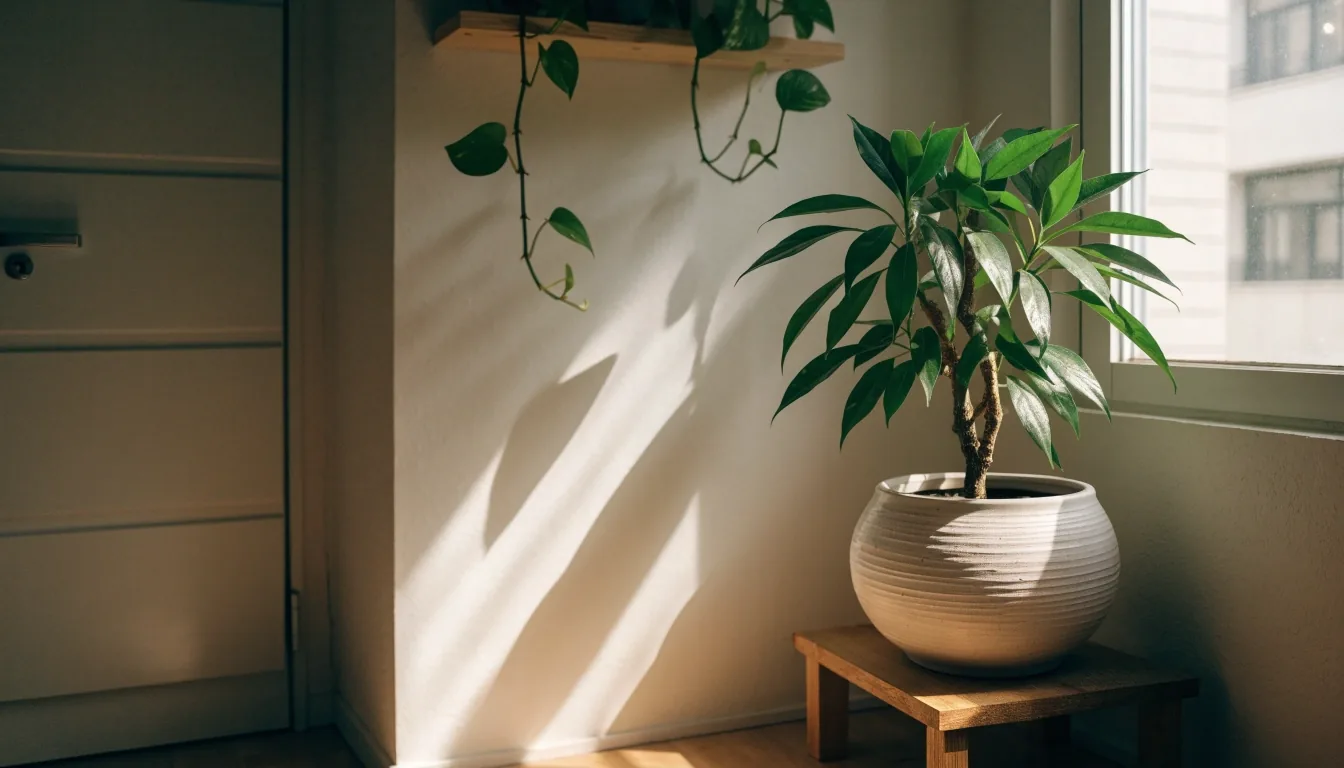
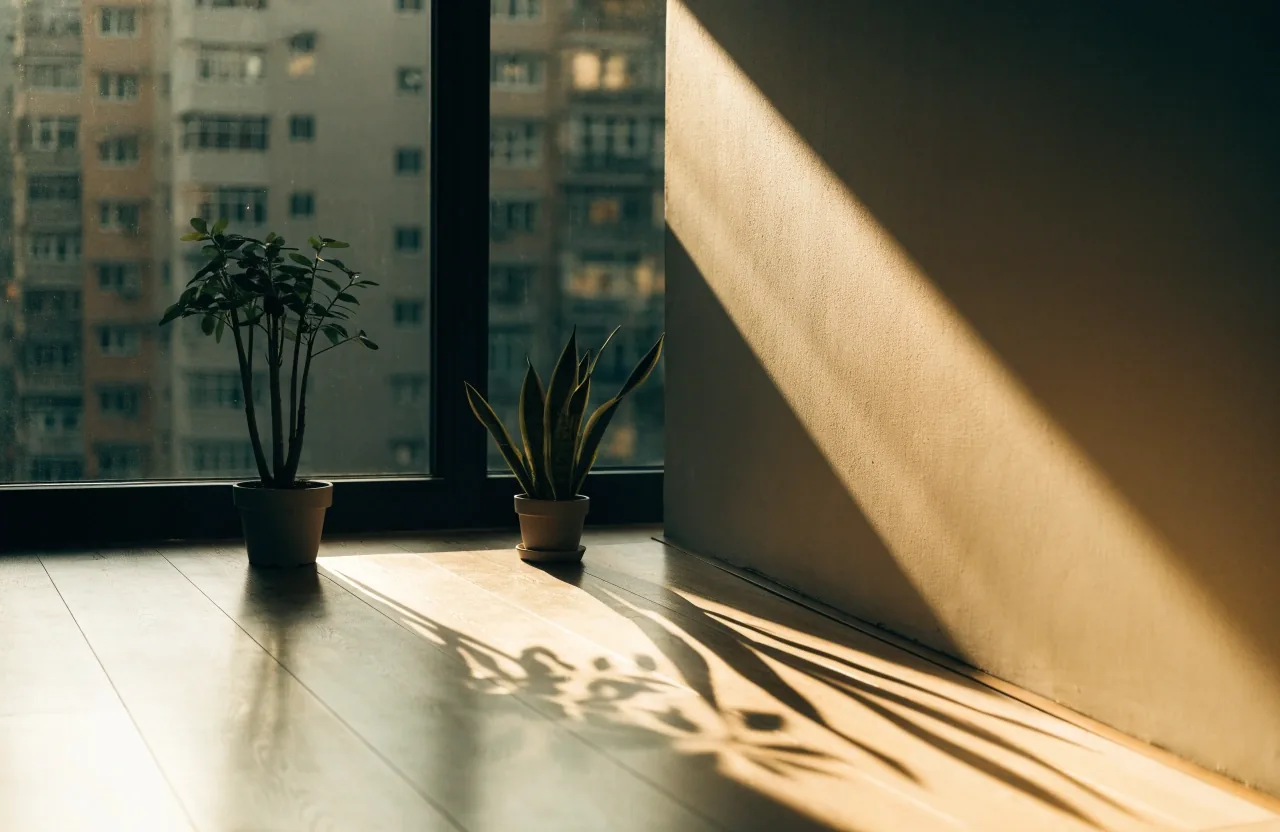
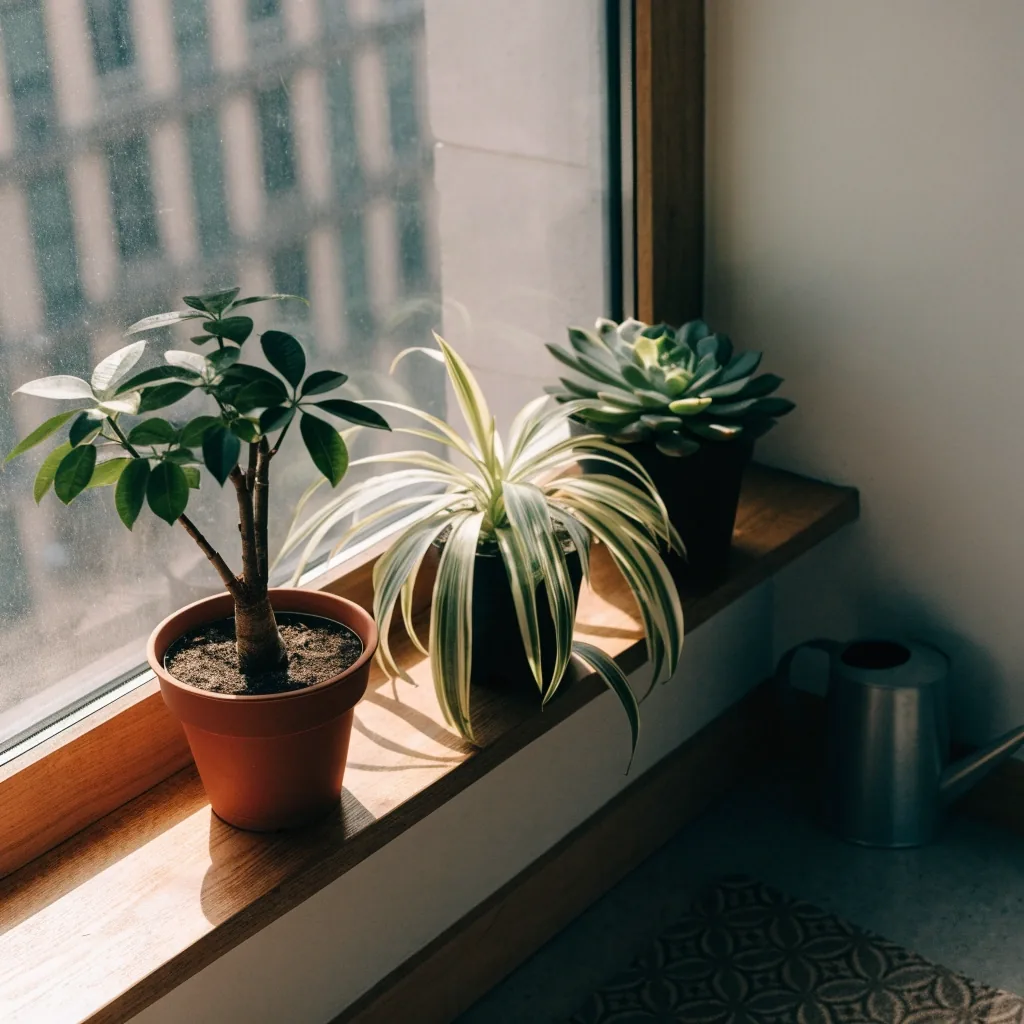
Money tree beside a tall window in a small Hong Kong apartment, daylight falling across pale walls

Light for Indoor Plants

Read the light in your flat before you choose the plant

Most plants that struggle indoors in Hong Kong are not dying from neglect. They are sitting in the wrong place. This guide shows how to judge a window, a corridor, or a desk corner by eye, then match the spot to a plant that will actually cope with it.

Light changes through the day

A window that looks bright at breakfast can be dim by four in the afternoon. Before you decide where a plant lives, watch that spot at three different times of day.

Distance from glass matters

Light falls off quickly indoors. A plant one metre back from the same window receives a fraction of what it gets on the sill, and buildings opposite cut it further.

The plant is the second question

Read the position first, then choose. Matching a low-light tolerant plant to a genuinely dim corner beats moving a sun-lover around the flat every week.

How to judge a spot

Bright window, indirect light, or a low-light corner

Stand where the plant will sit, not where you usually stand. Look up. If you can see a slice of open sky from that position, the spot is brighter than it feels. If a neighbouring block, an air-conditioning unit, or the opposite wall fills the whole view, treat it as dim no matter how white the room looks.

The three bands below cover almost every position in a Hong Kong flat or office. Most homes have one of each, and that is enough variety for a small collection.

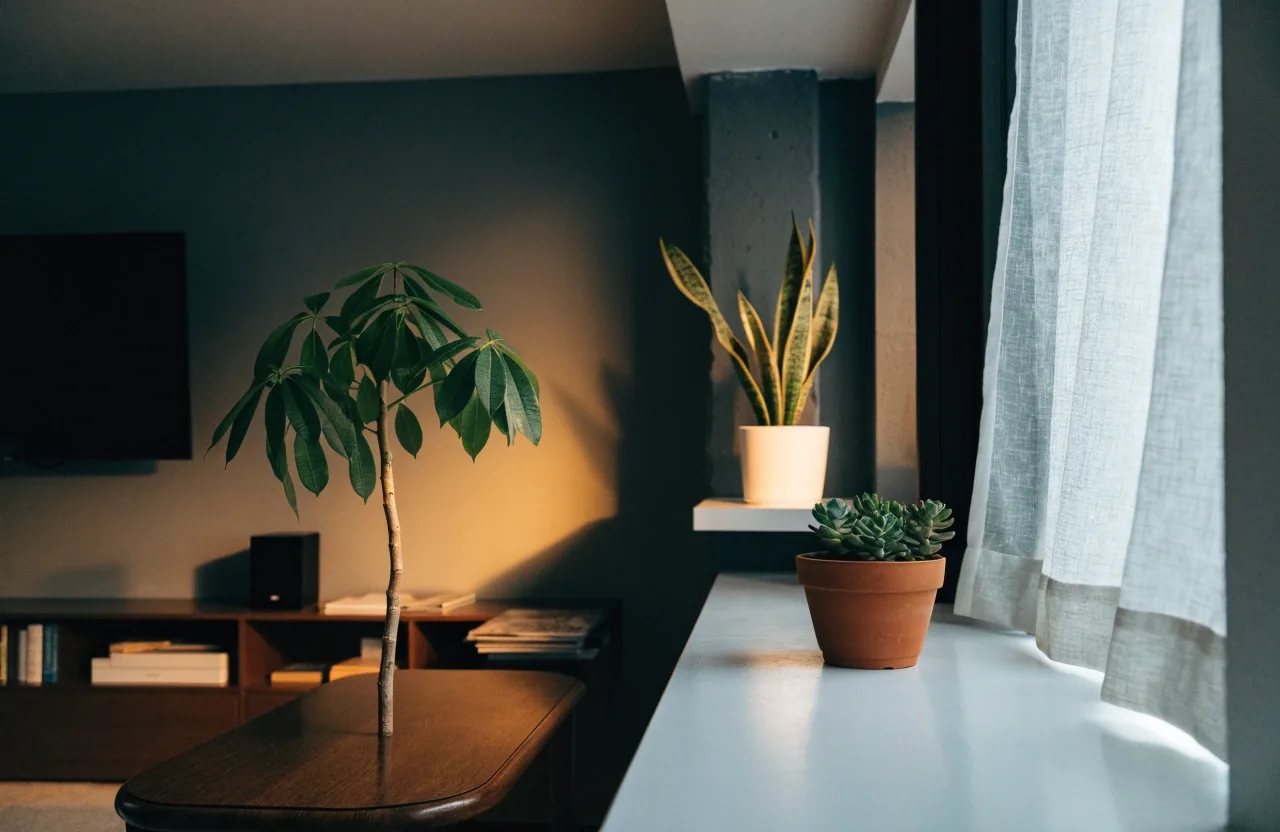
Three plant positions in a compact Hong Kong living room, from a bright windowsill to a shaded hallway corner

Bright window

A south or east-facing window with open sky in front of it. Light lands directly on the leaves for part of the day. Jade, ponytail palm, and most succulents settle here. Check the glass in summer: strong afternoon sun through a closed window can scorch leaves that touch it, so pull plants back a hand's width.

Indirect light

The usual situation in a Hong Kong flat: a window with a neighbouring block or a sheer curtain in front, so the room stays bright but the sun never draws a hard line on the floor. Most foliage houseplants do well here, including pothos, philodendron, and spider plants. This is the easiest band to keep plants alive in.

Low-light corner

A hallway, an internal wall, or a room whose only window faces a light well. You can still read a newspaper here, but plants grow slowly and stay small. ZZ plant, snake plant, and cast iron plant tolerate it. Expect slower growth and much less watering than plants near a window.

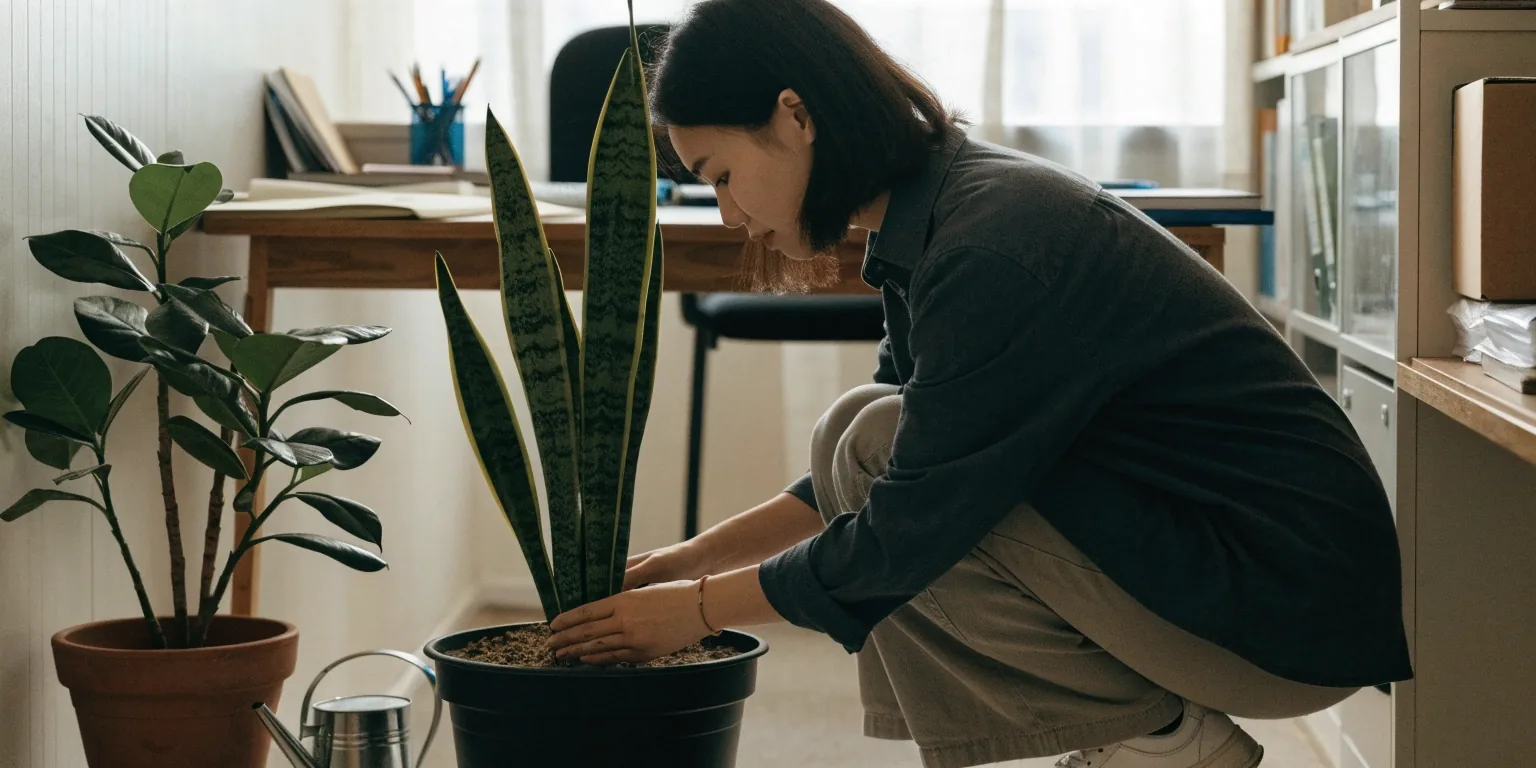
Rows of small potted plants along a bright office window ledge with blurred city buildings behind the glass

Watch it, do not guess

Leave your hand on the sill for a minute at noon. If the surface feels warm, the plant there will feel it too.

This is the fastest test in a small flat. It also catches the one spot people get wrong most often: a west-facing window in the afternoon, which can be far harsher than the bright but shaded window it looks like from across the room.

Which plants suit which light

Use this as a starting point, not a rule book. The same species can behave differently in two flats on the same street, because ceiling height, window size, and the building opposite all change the reading.

Plant choices by light band
Light band Plants that cope What to expect
Bright window Jade plant, ponytail palm, aloe, most succulents, rosemary in a pot Steady growth, visible new leaves, soil dries out in a few days. Water more often than the rest of the flat.
Indirect light Pothos, philodendron, spider plant, peace lily, rubber plant The most forgiving band. Leaves keep their colour and the plant grows at a moderate pace through the year.
Low-light corner ZZ plant, snake plant, cast iron plant, heartleaf philodendron Very slow growth and long gaps between waterings. Leaves stay green but new growth is rare.
Grow light Herbs, seedlings, flowering plants, anything you want to push through winter Useful for an internal room with no window. A small clip-on bar lamp on a timer is usually enough for one or two pots.

Making a dark room work

Some rooms in Hong Kong simply do not have enough daylight, and no amount of rearranging will change that. An internal bedroom, a study with one small window onto a light well, or a desk in the middle of an open-plan office all fall into this group.

A grow light is the honest answer here. You do not need a full shelving rig with reflective walls. A single bar lamp clipped to a shelf, set on a timer for a fixed block each day, gives a low-light tolerant plant the steady light it cannot get from the room. Keep it close to the leaves rather than high above them, and check the leaves after a week: pale, stretched growth means the lamp is too far away, while crisp brown patches mean it is too close.

If a lamp is not practical, the alternative is to accept slower growth. A ZZ plant in a dim corner can sit for a year without much visible change, which suits some people and frustrates others. Decide which of those you are before you buy the plant.

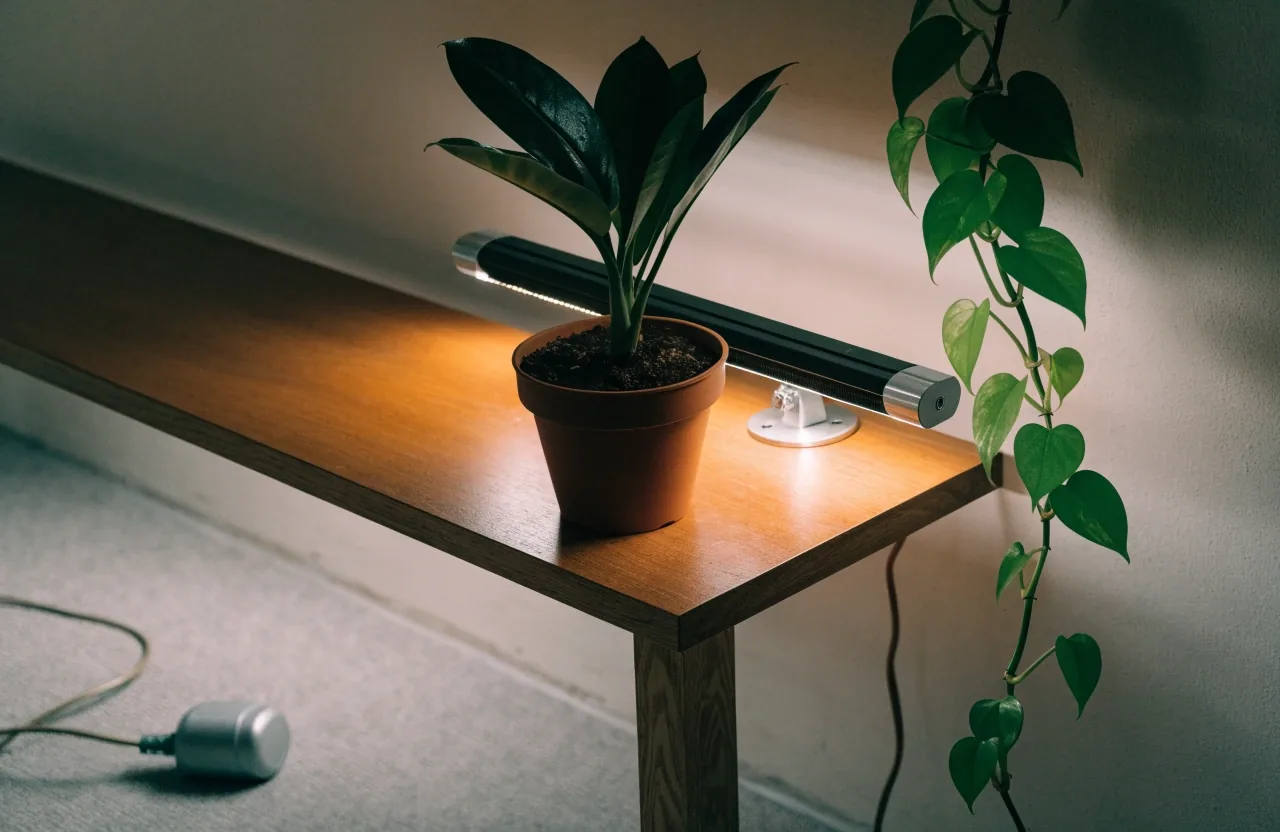
A clip-on grow light bar above two potted plants on a shelf in a windowless Hong Kong room

A single bar lamp over one shelf is enough for an internal room. Keep the timer on a fixed block so the plant gets the same light every day.

Signs to watch

What the plant tells you about the light

A plant in the wrong light will show it within a few weeks, and the signs point in opposite directions. Read them before you move anything, because a plant that is already stressed will react badly to a sudden change of position.

Long gaps between new leaves
Usually not enough light. Growth has stopped rather than slowed, and the leaves that do appear are small.
Stems stretching toward the window
The plant is reaching for light it cannot get where it sits. Move it a step closer to the glass, or turn it a quarter turn each week to keep growth even.
Crisp brown patches on the leaves
Too much direct sun, often through glass in the afternoon. Move the plant back from the window or filter the light with a sheer curtain.
Faded or yellowing leaves in the middle of the plant
Often a lighting problem before it is a watering one, especially in winter when daylight hours drop. Check the light first, then the soil.

Season and city change the reading

Hong Kong light is not constant. Summer brings long bright days and heavy overcast weeks during the rainy season. Winter days are shorter and the sun sits lower, so it reaches deeper into rooms that stay shaded for most of the year.

Buildings opposite you also change with the season. A block that blocks the morning sun in winter may leave the same window clear in summer, and a new development going up next door can quietly turn a bright window into an indirect one. Check your main plant positions twice a year, at the start of summer and the start of winter.

If a position gets noticeably darker, you have two choices: move the plant closer to the window, or move it down the shelf to a species that needs less. Rotating a plant between a bright spot in summer and a softer spot in winter is a normal part of keeping it indoors.

Low winter afternoon sun reaching deep into a Hong Kong apartment, casting long plant shadows across the floor

Winter sun sits lower, so it reaches further into the room. A spot that is dim in July can be one of the brightest in the flat by December.

Common questions

Questions people ask about light

Is a north-facing window always too dark for plants?

Not always. A north window with open sky in front of it still delivers steady, even light with no harsh sun, and many foliage plants are happy there. The problem is a north window that faces a wall or another block, which leaves the room genuinely dim. Judge the view, not the direction alone.

Can I just leave the ceiling light on instead?

A household bulb gives far less usable light for a plant than it looks like it does, because it is dim compared with daylight and usually far above the leaves. It can help a low-light tolerant plant hold on, but it will not drive real growth. A small grow light positioned close to the plant does much more for the same electricity.

How long should a grow light stay on each day?

A fixed block of several hours, at the same time each day, suits most indoor plants better than switching it on whenever you remember. Put it on a simple timer and keep the lamp at a short distance above the leaves. If growth turns pale and thin, move the lamp closer; if leaves scorch, move it further away.

Does air conditioning change anything?

Indirectly, yes. A unit running all day dries the air around the plant and the leaves lose moisture faster. A plant that sits directly under a vent may look light-starved when it is really being dried out. Move it out of the direct draught before you change its position for light.

Next: place the plant you already have

Once you know how your flat reads through the day, the next step is fitting plants into the space you actually have — narrow windowsills, shared desks, rented rooms you cannot drill into.

Three small potted plants arranged along a narrow windowsill in a compact Hong Kong flat