
Start here
A routine that fits the week you actually have
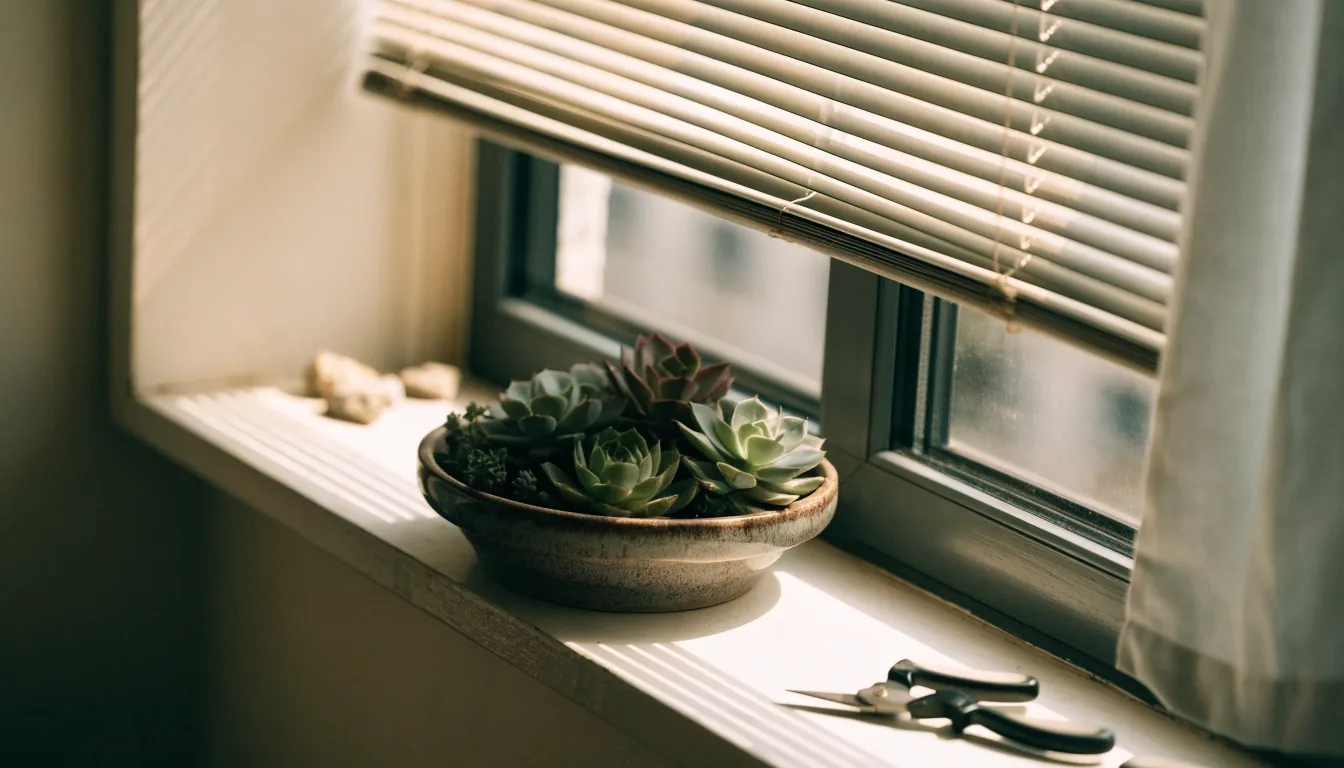
Most Hong Kong flats and offices give plants a narrow window, steady air-conditioning, and a schedule that leaves little room for fussing. A care routine works best when it is short, repeatable, and matched to those conditions rather than to a general houseplant calendar.
The rhythm below splits tasks into a weekly pass you can do in minutes, a monthly session for cleaning and feeding, and a seasonal check tied to Hong Kong's humid summers and drier, air-conditioned winters.
Weekly pass
A five-minute walk-through: check soil moisture, look under leaves, remove anything dead or dusty. This catches most problems before they spread.
Monthly session
A longer sit-down: wipe leaves, rotate pots, check for pests, and feed plants that are actively growing. This is where most of the real maintenance happens.
Seasonal check
Twice a year, step back and look at the whole collection. Light shifts, growth slows, and watering needs change — especially when air-conditioning runs or stops.
Office plants
Desk plants follow the same rhythm, but with one difference: weekend air-conditioning and closed blinds. A Monday check is often the most useful one for a desk plant.
The weekly five-minute pass
Pick one day — Monday morning works well if you have office plants, since it catches anything that happened over the weekend. The whole pass takes about five minutes for a small collection of five to eight plants.
Check the soil
Push a finger about two centimetres into the soil. If it feels damp, wait. If it feels dry, water until it runs out the drainage holes. In Hong Kong's humid months, many plants need less than their labels suggest.
Look under leaves
Turn a few leaves over. Fine webbing, sticky patches, or small clusters along the veins usually mean pests have moved in. Catching them early is far easier than treating an established infestation.
Remove dead material
Snip or pinch off yellowing leaves and spent flowers. Dead tissue sitting against healthy growth keeps moisture trapped and gives pests a place to hide.
Turn the pots
Give each pot a quarter turn so growth stays even. In a narrow window, a plant left facing one direction will lean toward the light within a few weeks.
The monthly session: cleaning, feeding, checking
Set aside twenty minutes once a month. This is the pass that keeps leaves working properly and catches slow problems — dust build-up, salt crust on soil, or a plant that has quietly outgrown its pot.
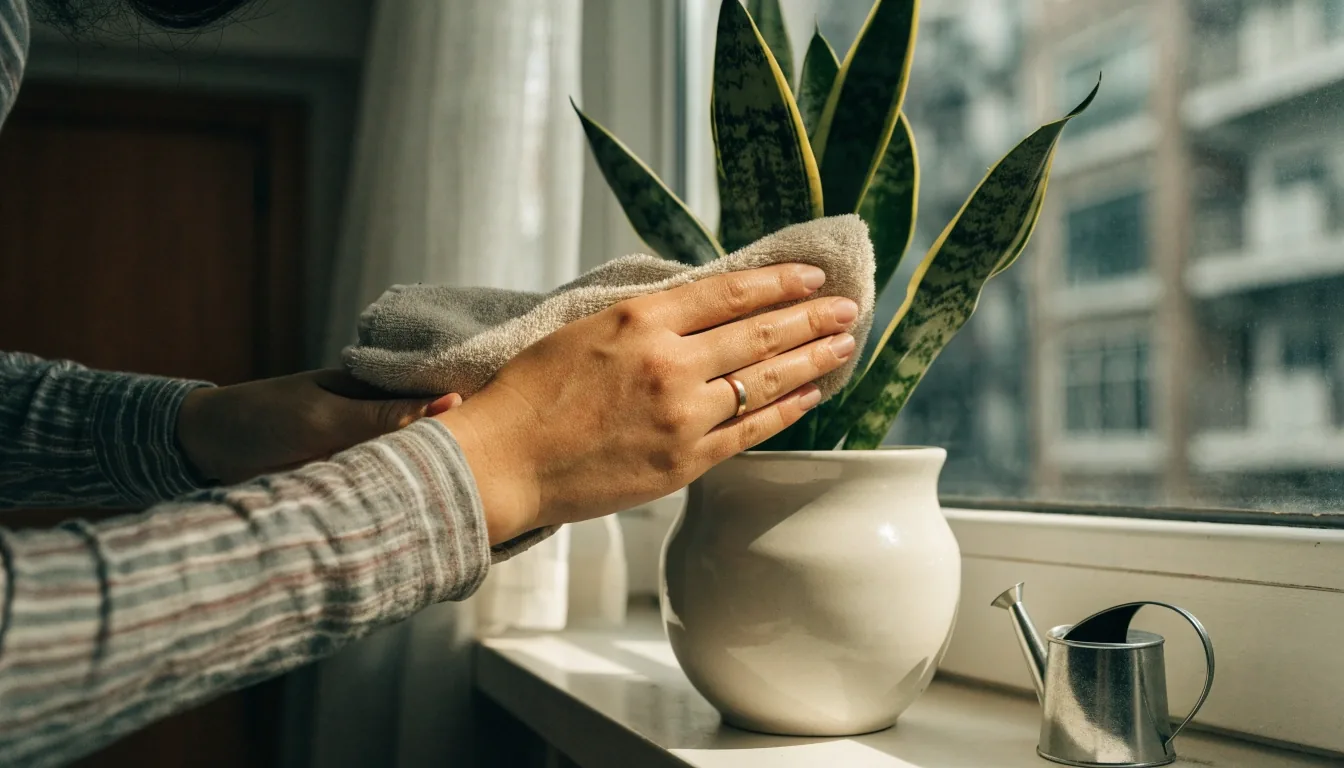
Wipe the leaves
A soft damp cloth on both sides of each leaf removes dust that blocks light. For fuzzy leaves like African violets, use a soft brush instead of a wet cloth.
Feed growing plants
Feed only plants putting out new leaves. In Hong Kong's warm months that is most of them; in cooler, air-conditioned rooms, many plants slow down and need little or nothing.
Check the roots
Lift a pot and look at the drainage holes. Roots circling the surface mean the plant is ready for a larger container — see the repotting guide for how to do it.
Seasonal checks for Hong Kong weather
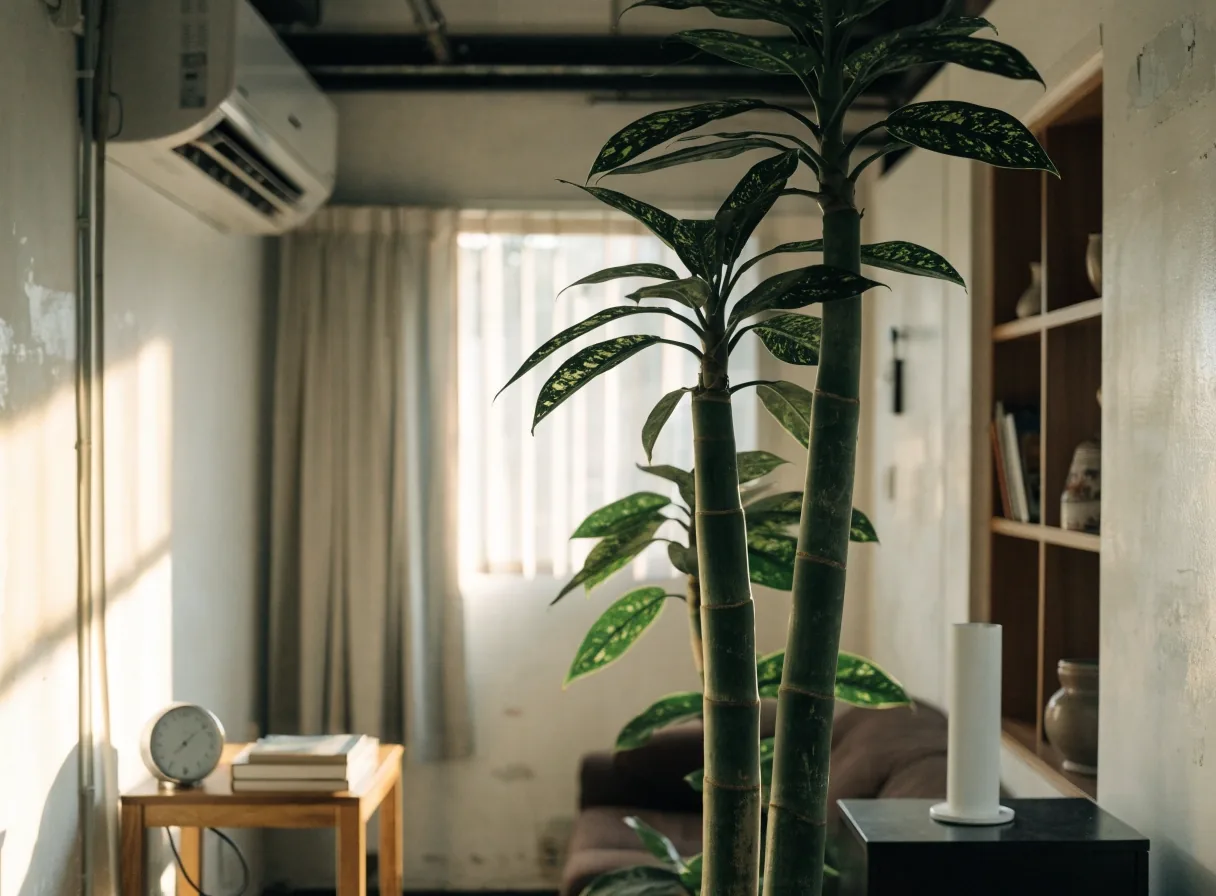
Hong Kong's growing seasons are not the same as the plant labels assume. Summers are hot and humid, winters are milder but air-conditioned interiors can be surprisingly dry.
- In humid summer months, water less often than a generic schedule suggests and watch for mould on soil surfaces.
- When air-conditioning runs daily, check plants more often — dry air pulls moisture from leaves and soil faster.
- Light shifts through the year. A spot that worked in winter may be too bright or too dim by midsummer.
A routine is not a set of rules. It is a short list you can actually keep.
What to look for each month
Most plant problems show up as small changes long before they become serious. A monthly check is your chance to spot them while they are still easy to fix.
Yellowing or dropping leaves
Usually a watering issue — too much or too little. Check the soil before changing anything else.
Sticky residue on leaves
Often a sign of sap-sucking insects. Wipe the leaves and inspect nearby plants before treating.
White crust on soil
Mineral build-up from tap water. Scrape off the top layer and replace it with fresh potting mix.
Leggy, stretched growth
A sign the plant is reaching for light. Move it closer to a window or add a small grow light.
Start with one plant and one week
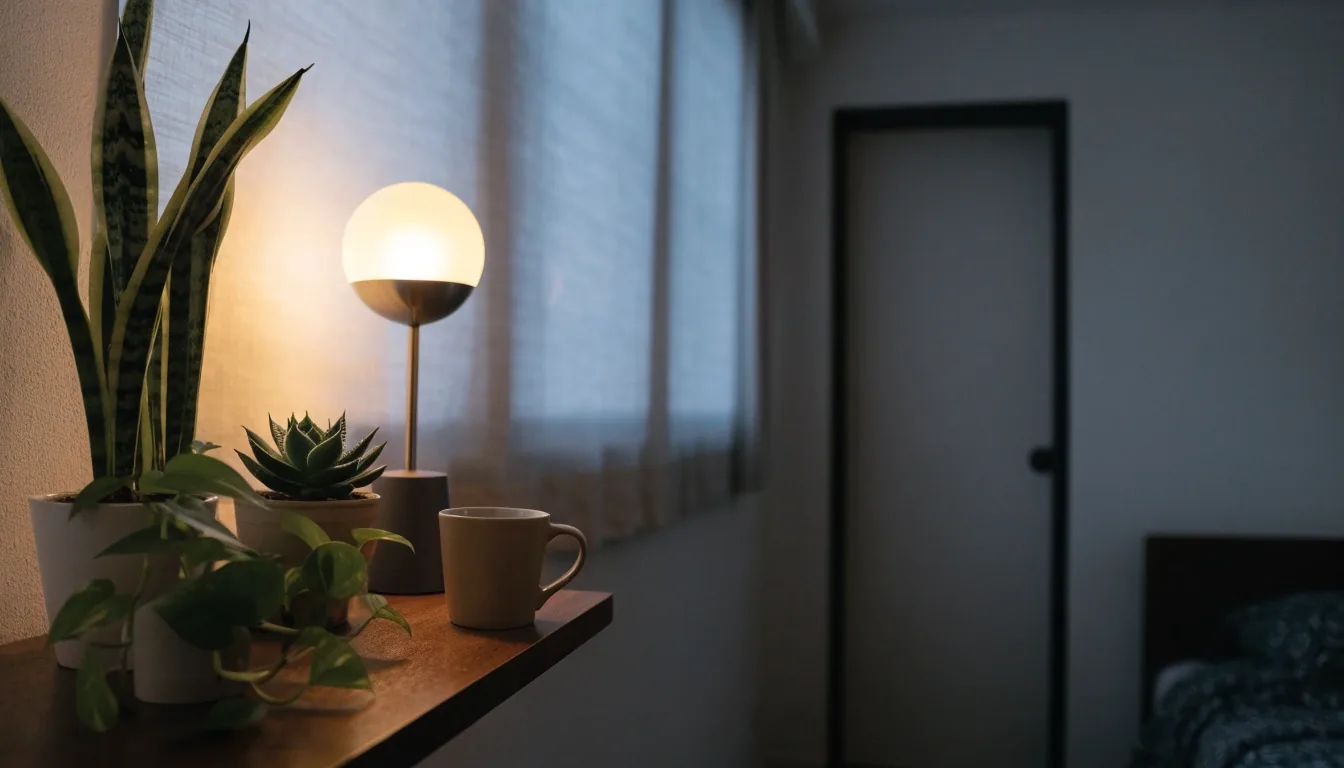
Pick a single plant, try the weekly pass for seven days, and see how it feels. Once the habit sticks, add the monthly session and adjust the rest to your own space.
Questions about the routine
A few things readers ask most often when they are setting up a routine for the first time.
How often should I water if I am not sure?
Check the soil before watering, not the calendar. Push a finger two centimetres in — if it feels damp, wait another day or two. In Hong Kong's humid months, that check often replaces a fixed schedule entirely.
Do office plants need a different routine?
The routine is the same, but the timing matters more. Closed blinds and reduced weekend air-conditioning change how fast soil dries. A Monday check catches anything that happened over the weekend.
Should I feed plants year-round?
Feed when the plant is actively growing, usually when you see new leaves forming. In cooler, air-conditioned rooms, growth slows and feeding can be reduced or paused until it picks up again.
What if I miss a week?
Nothing dramatic happens. Plants handle a missed week far better than they handle a panicked overwatering session. Pick the routine back up when you can, and check the soil before you do anything else.