
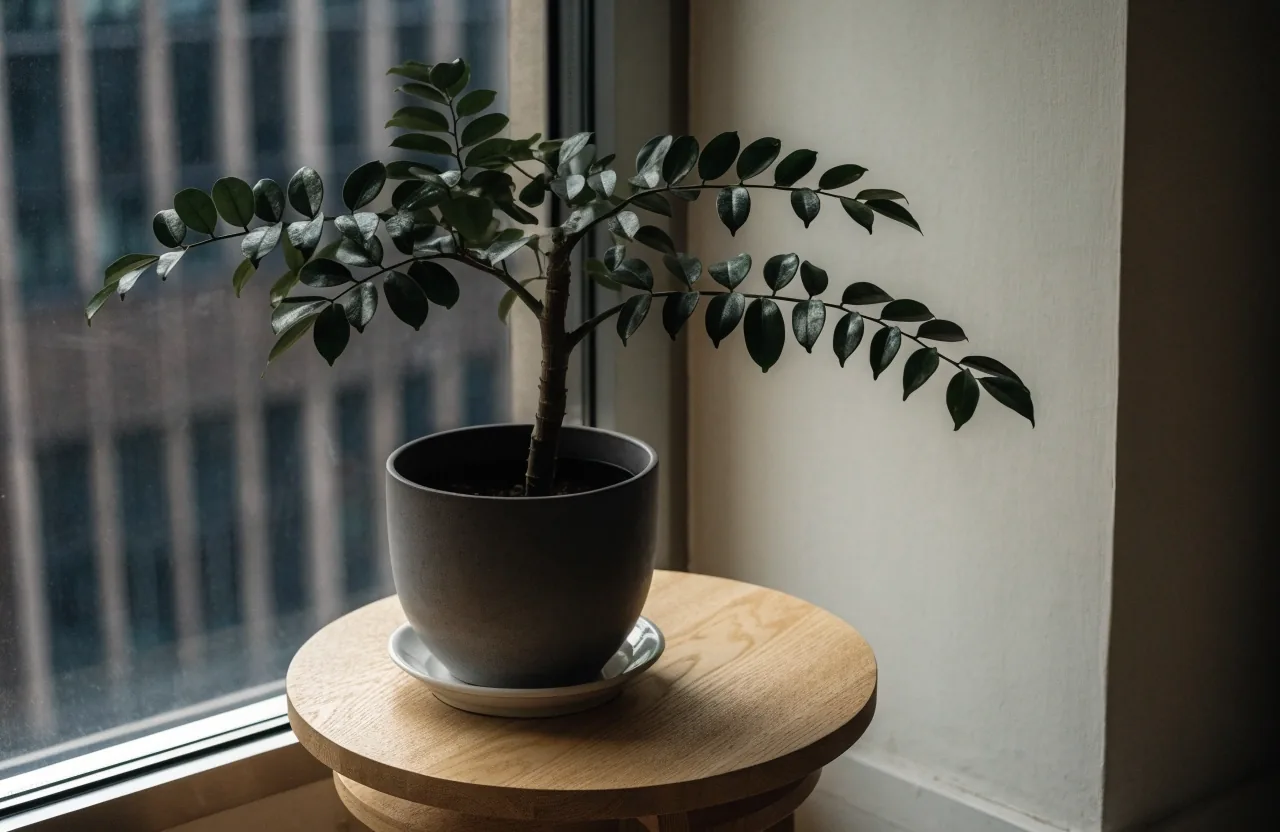
Why most indoor plants die of kindness
Overwatering is the most common way houseplants fail indoors, and it rarely looks like drowning at first. Yellow lower leaves, a soft dark base, and soil that stays damp for a week are the usual signs. In Hong Kong the air is humid for months at a time, and an air-conditioned flat dries the surface of the soil much faster than the soil an inch down. Watering on a fixed weekly schedule ignores both facts.
What humidity does
Drying slows down
From roughly March to September the air in most Hong Kong flats holds a lot of moisture. Water evaporates from the pot surface slowly, so a plant that dries in four days in a dry climate can stay damp for eight or nine. That extra time is where root rot starts.
What air-conditioning does
The top dries first
Cool, dry air pulls moisture from the top centimetre of soil within a day or two, while the deeper root ball stays wet. Feeling only the surface tells you almost nothing. That gap between a dry top and a wet middle is exactly what the top-inch check is designed to catch.
One habit replaces the schedule: check the top inch before you pour.
Everything below builds on that single check. If you only remember one thing from this page, remember where your finger goes, not which day of the week it is.
The four-step watering method
This is the whole routine. It takes about a minute per plant, and it works whether the plant sits in a living room in Kennedy Town or a meeting room in Kwun Tong.
-
1
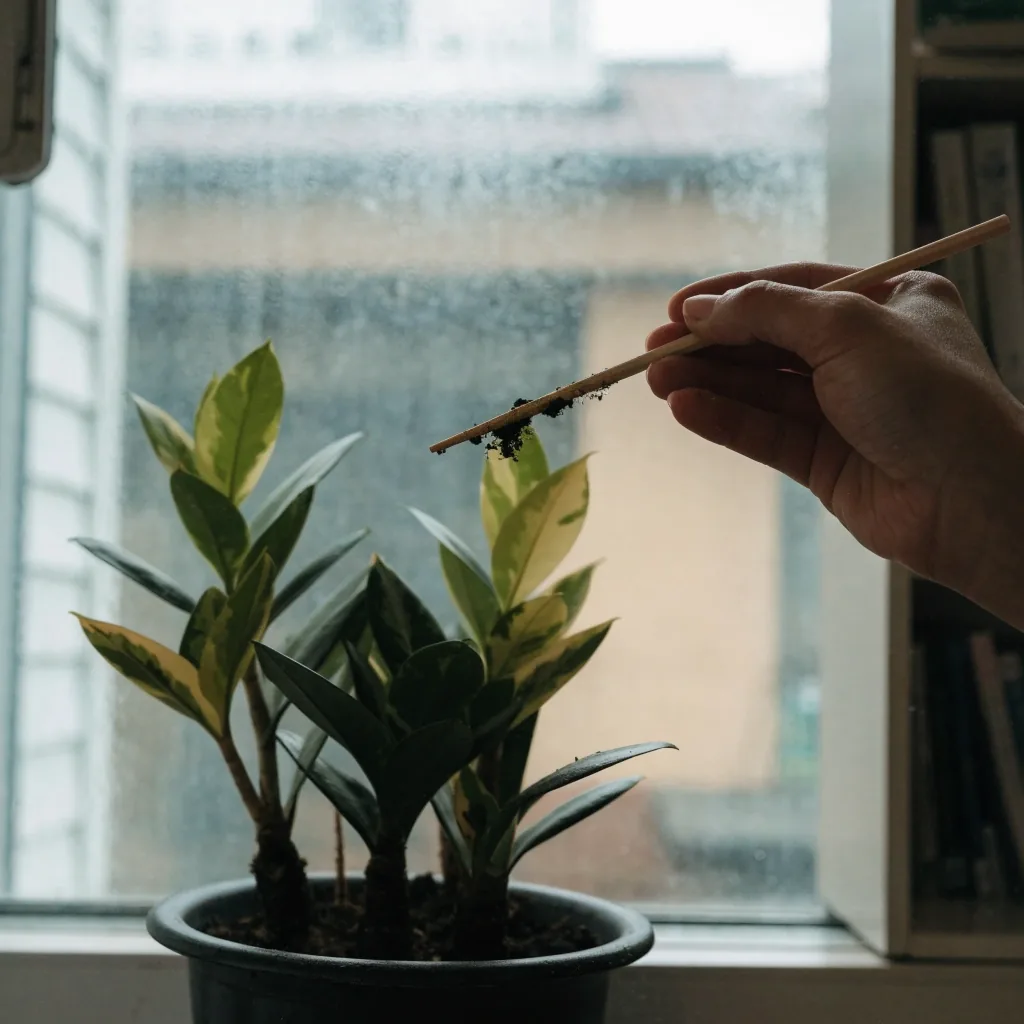
Check the top inch of soil
Push a finger about 2.5 cm into the soil, just past the first knuckle. If it feels dry at that depth, the plant is ready. If it feels cool and damp, wait two or three days and check again. For larger pots, a cheap wooden chopstick works the same way — push it in, pull it out, and look for damp soil clinging to the wood.
-
2
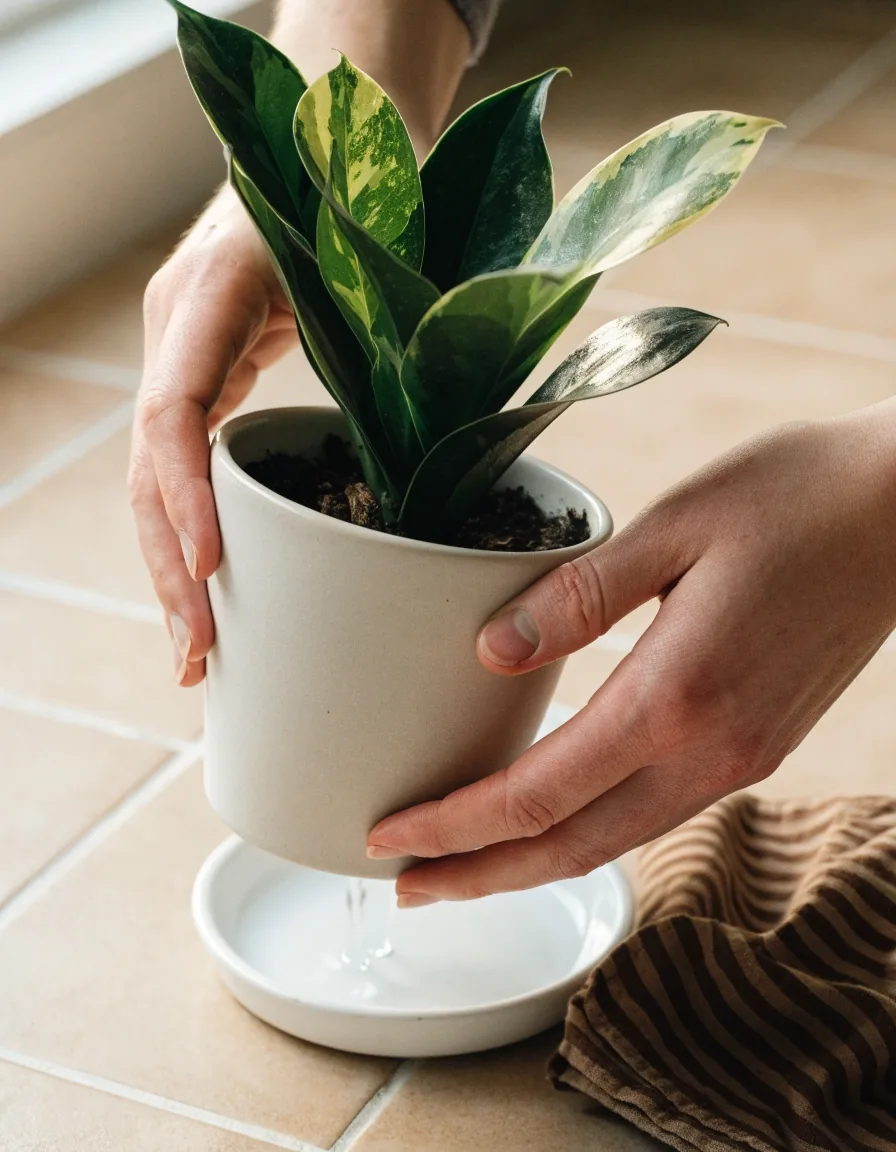
Water until it runs out of the drainage holes
Pour slowly and evenly across the whole surface, not in one spot near the stem. Stop when water appears in the saucer or drains from the base. This flushes stale, mineral-heavy water out of the root zone and guarantees the lower roots get wet, not just the top.
-
3
Empty the saucer within half an hour
Standing water in a saucer is the quiet cause of most rot. Tip it out once the pot has finished draining. If a pot has no drainage holes at all, water far less and use a moisture meter, or move the plant into a nursery pot that sits inside the decorative one.
-
4
Note the date, then wait for the plant
Write the date somewhere visible, or set a reminder for seven days later as a prompt to check — not as a command to water. Over a month or two you will see the pattern: most low-maintenance plants in a Hong Kong flat need water every seven to fourteen days in summer and every two to three weeks in winter.
Drainage holes do more for a plant than any watering gadget
A pot with a drainage hole lets excess water leave the root zone. Without one, every drop you add stays in the pot and slowly replaces the air the roots need. If a plant has been struggling, the pot is the first thing to check — before you change how often you water.
Pots with drainage
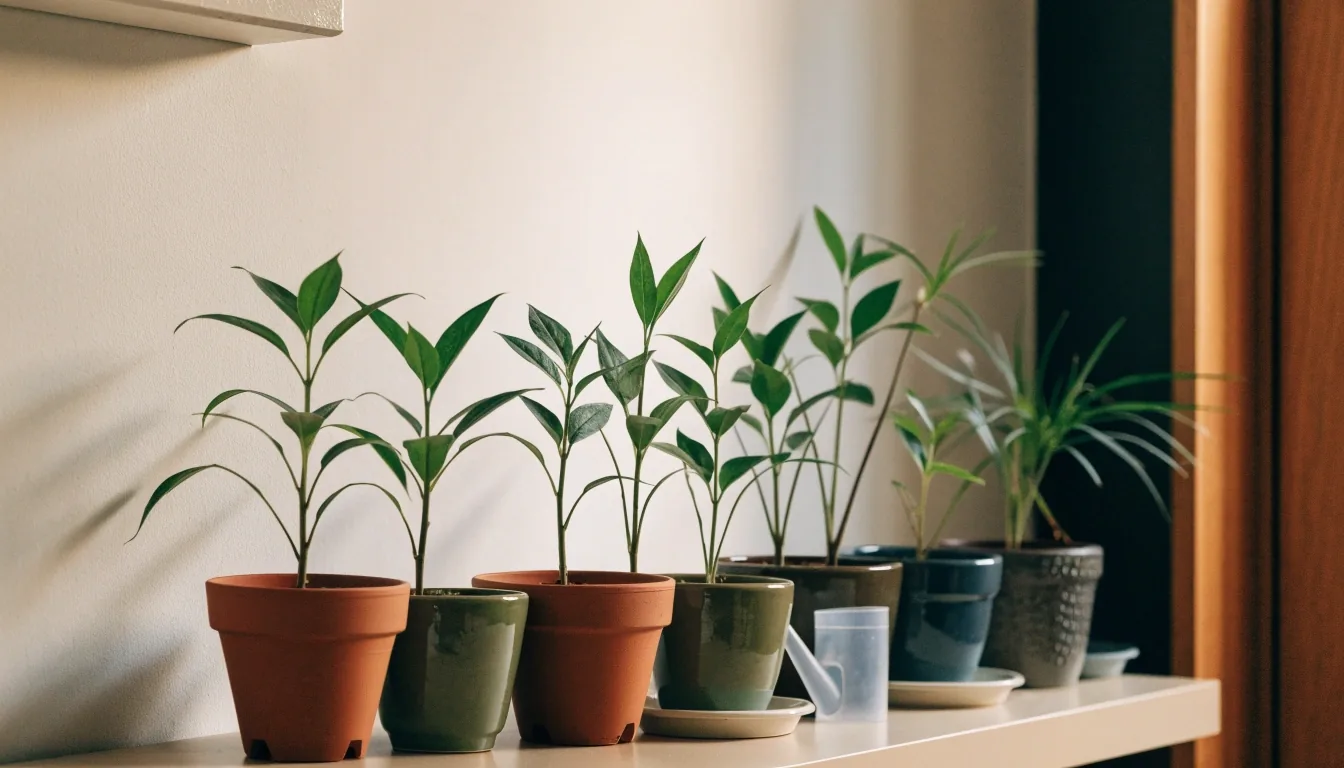
The safest setup: a nursery pot with holes sitting inside a decorative cover pot. You lift the inner pot, water it over the sink, let it drain, and drop it back. The cover pot never holds water, and the plant never sits wet.
Self-watering planters
These hold a reservoir below the soil and wick water upward. They suit ferns and other thirsty plants, but they keep the soil consistently moist, which is risky for succulents, ZZ plants, and snake plants. If you use one, check the reservoir weekly and never top it up while it still holds water.
Water temperature
Let tap water stand in an open jug overnight so it reaches room temperature and the chlorine dissipates. Cold water straight from the tap shocks tropical roots, and in air-conditioned rooms the difference is sharp enough to slow a plant down for days.
Reading the signs before it is too late
Under-watering and over-watering can look similar from a distance — both produce yellowing leaves. The differences are in the texture and the position on the plant. Use this as a quick diagnosis before you change anything.
When in doubt, wait. A plant that is slightly dry recovers in a day. A plant left in soggy soil for a week often does not.
What you see
Likely cause
What to do
Soft, yellow lower leaves
Overwatering
Stop watering, move the pot to a brighter spot, and check the drainage hole
Crisp brown leaf tips
Dry air or inconsistent watering
Water more evenly and keep the plant away from direct air-conditioning vents
Soil still damp after a week
Pot too large, or no drainage
Move the plant to a smaller pot with holes and a looser mix
Leaves drooping in the afternoon
Often just heat stress, not thirst
Check the top inch of soil before watering — drooping alone is not a signal
White crust on the soil surface
Mineral build-up from tap water
Flush the pot slowly with room-temperature water and let it drain fully
Adjusting for Hong Kong's seasons
The same plant in the same pot can need water twice as often in one part of the year as another. Rather than learning a fixed number, watch how the soil behaves through the year and let that set the pace.
Warm and humid
Late spring to early autumn
Growth is active, so plants use water faster — but the damp air slows evaporation from the pot. Check every five to seven days. Air-conditioned rooms still dry out quickly, so a plant near a vent may need water sooner than one on a sheltered shelf.
Cooler and drier
Late autumn to winter
Most houseplants slow down or stop growing. Their roots take up far less water, so the soil stays damp longer. Cut back to every two or three weeks, and check first every time. This is the season when most overwatering damage happens quietly.
If you travel or leave the office for a week, a plant that was checked and watered the day before you go is in a better position than one that was watered on a schedule two days earlier. Consistency of checking matters more than consistency of pouring.
Common questions about watering
These are the questions that come up most often from people watering plants in small flats and shared offices.
How often should I water in a Hong Kong flat?
There is no fixed number that fits every plant. Check the top inch of soil every five to seven days in the warm months and every two to three weeks in winter, and water only when that top inch is dry. Most low-maintenance plants in a Hong Kong home end up needing water roughly every seven to fourteen days in summer.
My pot has no drainage hole. Is that a problem?
Yes, it makes overwatering much easier to do by accident, because any water you add has nowhere to go. The simplest fix is to keep the plant in a nursery pot with drainage holes and drop that inside the decorative pot. Water it over the sink, let it drain, and put it back.
Can I use a moisture meter instead of my finger?
You can, and it helps in large pots where your finger cannot reach deep enough. Read the meter at root depth, not at the surface. Cheap meters vary a lot between units, so treat the reading as a second opinion next to the top-inch check rather than a replacement for it.
Is rainwater or filtered water better than tap water?
Hong Kong tap water is fine for most houseplants. Letting it stand overnight in an open jug brings it to room temperature and lets some chlorine dissipate. Rainwater and filtered water are gentle options for ferns and other sensitive plants, but they are not required for the routine on this page.
Should I water less in an air-conditioned room?
Not automatically. Air-conditioning dries the surface of the soil faster, so the top inch can feel ready while the deeper root ball is still wet. Check deeper than usual in air-conditioned rooms, and keep pots away from direct vents so the drying is even rather than patchy.
Where this fits in the rest of the guide
Watering is one part of keeping plants alive in a small space. These guides cover the parts that sit either side of it — what to plant, where to put it, and how to keep the whole routine manageable.
Choosing Easy-Care Houseplants
Start with plants that tolerate missed waterings and low light, so a busy week does not cost you the plant.
Read the guidePlacing Plants in Small Spaces
Where to put pots in a compact flat or office so they get useful light without blocking the room.
Read the guideLight for Indoor Plants
Light and water work together. A plant in weak light uses far less water and needs a slower schedule.
Read the guideRepotting and Root Care
How to move a plant into fresh mix and a pot that drains properly, so watering becomes predictable again.
Read the guideBuilding a Simple Care Routine
A short weekly check that covers watering, light, and leaf health without turning into a chore.
Read the guide
One check a week is the whole system
If your plants have been struggling, start by checking the top inch of soil and making sure every pot drains. Most of the rest — the right plant, the right spot, the right routine — follows from those two habits. Questions about a specific plant or a workspace setup? Get in touch and we will point you to the guide that fits.